Key Takeaways
- 1080p resolution perfectly balances the sharpness, battery life and performance(speed) for handheld console.
- In portable mode, lower resolution help games run smoother, above that doesn’t make much difference.
- It keeps the cost lower while leaving room for visual enhancements via shifting to docked mode(TV).
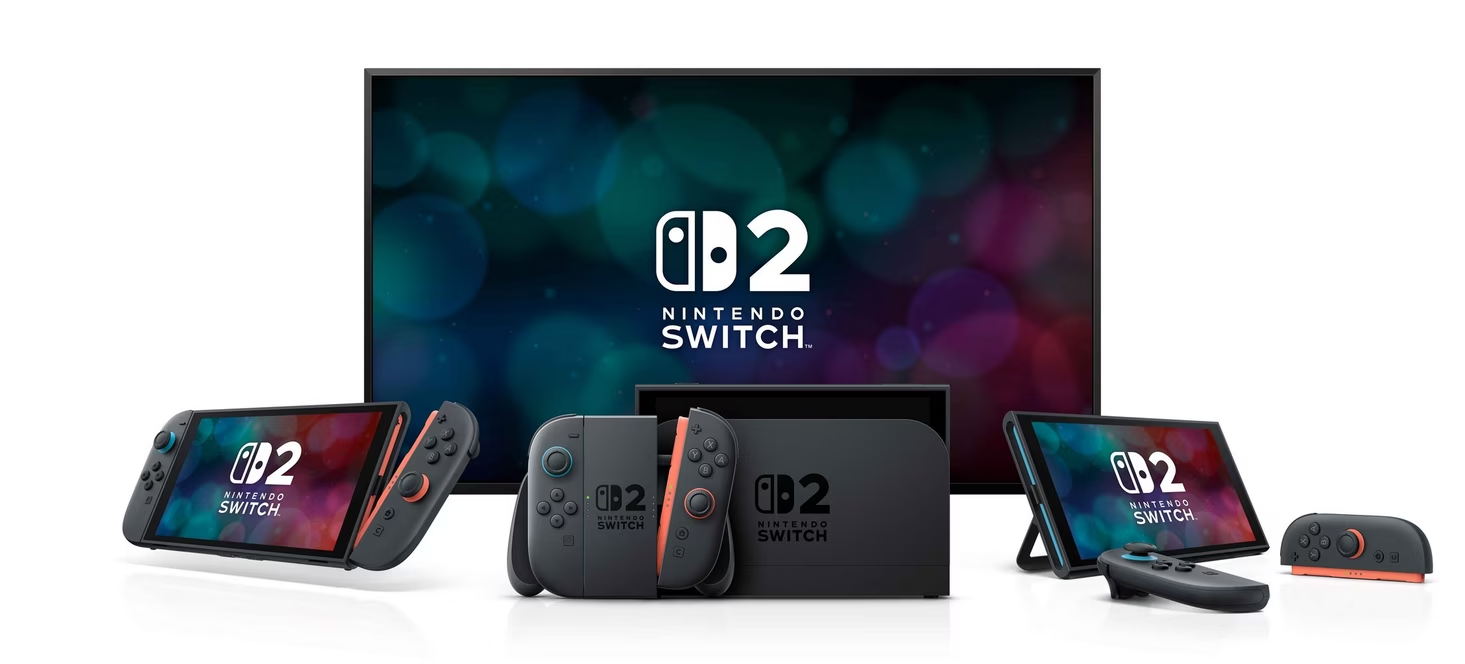
In April 2025, Nintendo officially revealed the specifications of the Switch 2. A debate sparked in market when people came to know that Switch 2 would feature only 1080p resolution. Many fans were expecting the next generation to aim for at least 1440p or even 4k output. It could have attracted more audience. But if we look deeper, there are many reasons, Nintendo stayed with 1080p. They chose what works best for the way players actually use the console, instead of chasing the biggest numbers for marketing.
Screen Size and Sharpness
There is very little difference between 1080p and 1440p resolution on a 7-8 inches console screen. People can hardly detect extra sharpness, unless they hold the screen very close while playing. At normal handheld distance, 1080p resolution already makes the resolution looks smooth and sharp – so the extra pixels from 1440p would not make noticeable visual enhancement. Instead, 1440p would demand more battery and processing power. For handheld mode, it (1080p) provides sufficient clarity without loosing performance.
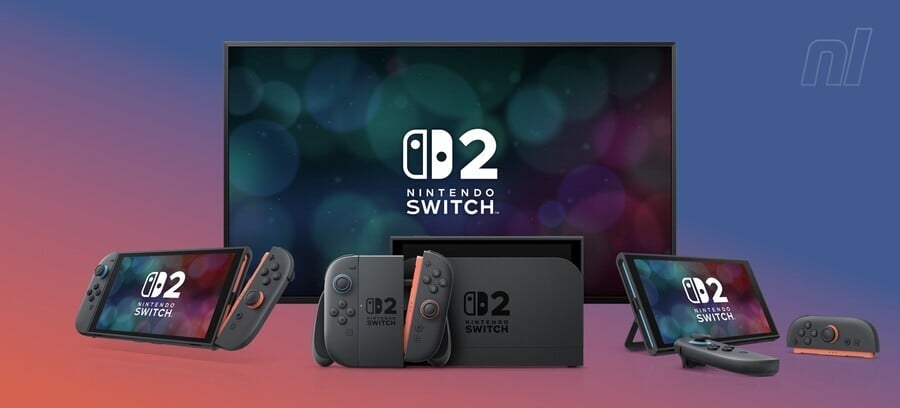
Nintendo Switch 2 – Image by (Nintendo Life)
Performance, Battery life and Portability
A higher resolution screen (1440p or above) demands more processing power and creates more heat as it forces the graphics chip to process more pixels per frame. When graphics chip has to process more pixels, it uses more electricity that drains the battery faster, and can make it harder to keep games running smoothly.
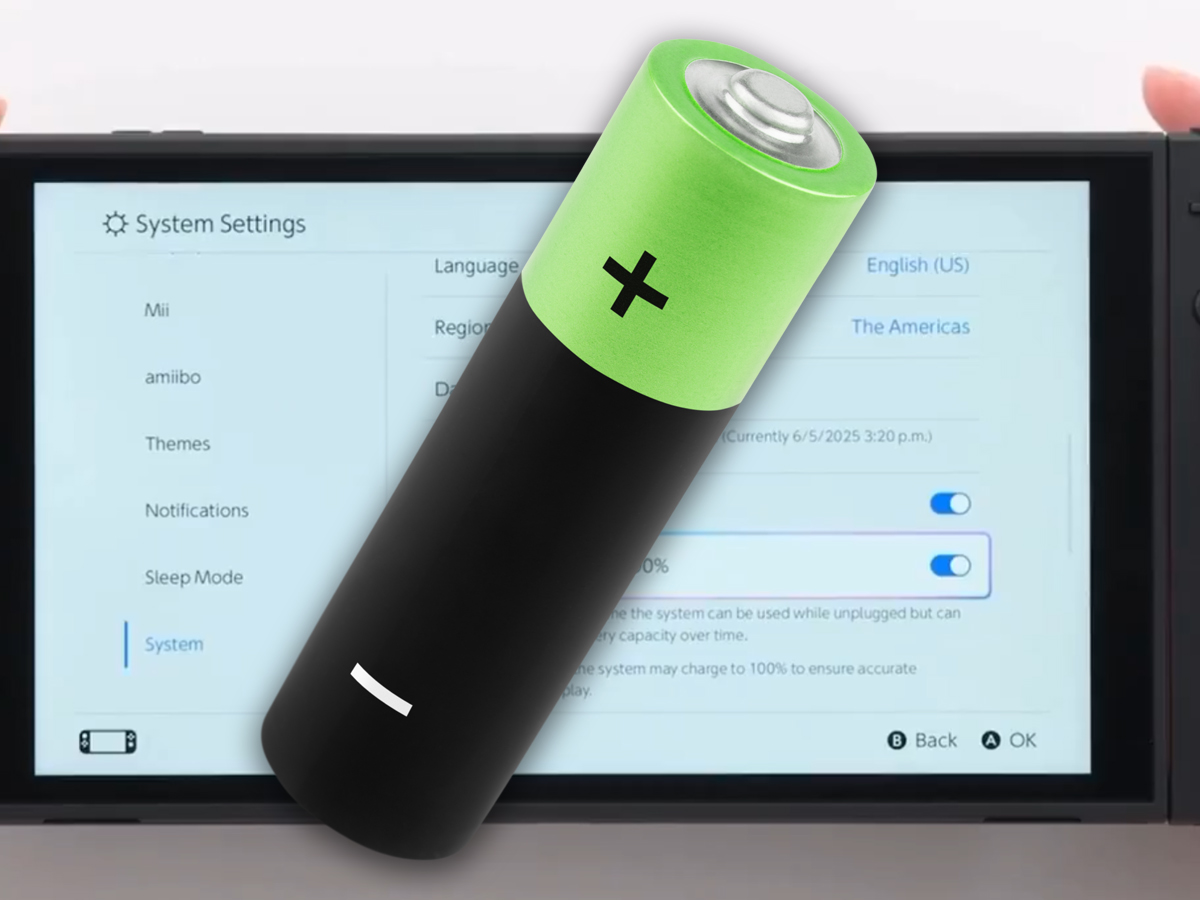
Nintendo Switch 2 Battery Life – Image by (EuroGamer)
Handheld mode is popular because players can play their favorite games anywhere without charging the console for long time. It means that longer playtime away from charger is more valuable than some extra pixels that players won’t notice. Original console often had to drop the screen resolution for some games – making image softer and blur in order to save performance, but with 1080p as the handheld standard, the switch 2 can maintain sharper visuals while still running smoothly.
Affordability Has Always Been Nintendo’s Edge
One of the biggest reasons the original Switch became such an instant hit was its price. Nintendo managed to sell over 130 million units by 2023, and that number is expected to pass 152 million by early 2025. But the Nintendo Switch didn’t beat its competition by implementing better hardware. It did so by being fun, portable, and affordable the real attraction lied in its charm.
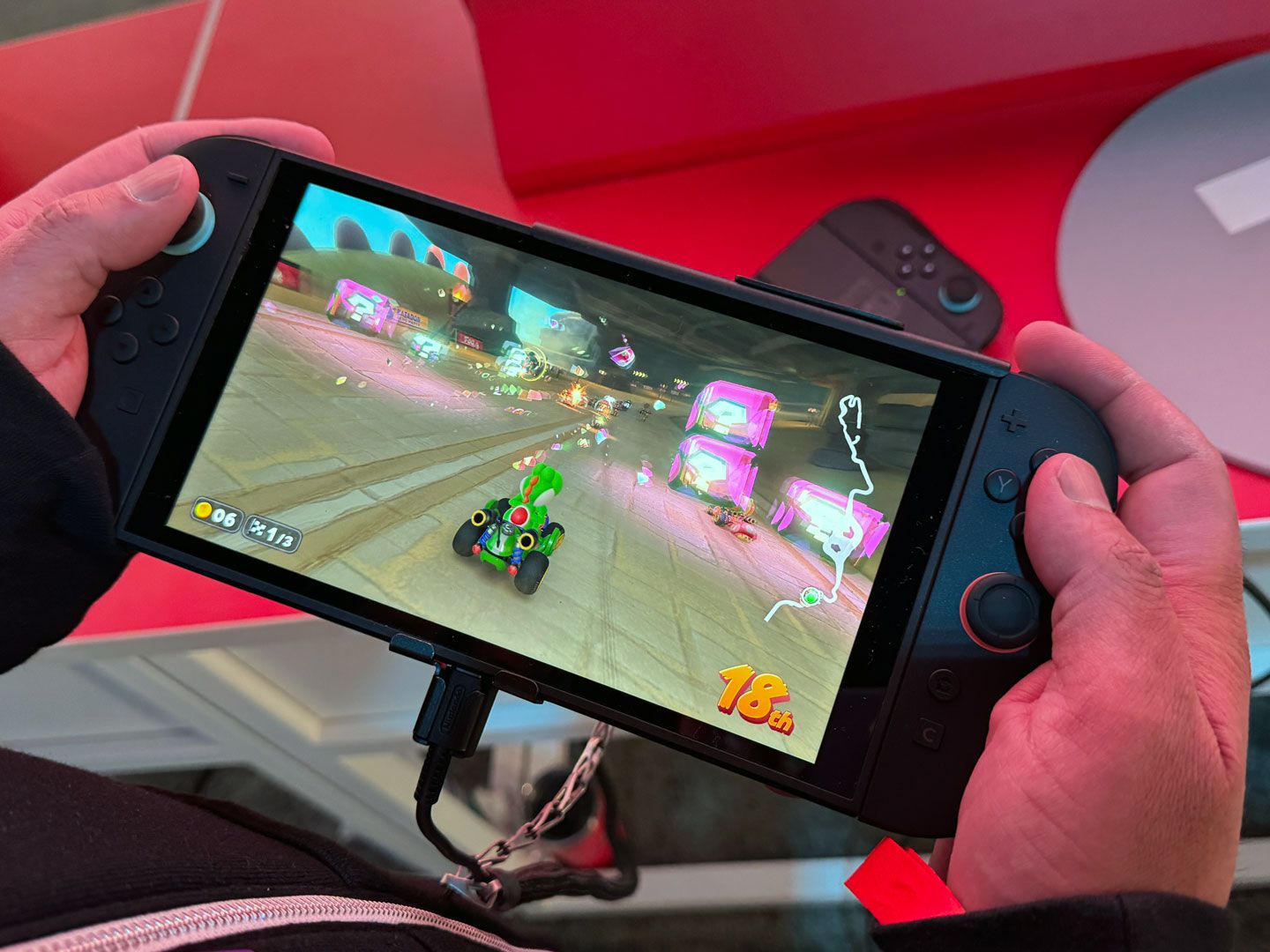
Nintendo Switch 2 1080p Screen – Image by (Tom’s Hardware)
If Nintendo had gone with a 1440p or 4K screen for the Switch 2, the cost of the system would’ve jumped way up. Sticking with 1080p means they can spend resources where it matters more better performance, stronger build quality, and longer battery life while still keeping the console at a price most people can get behind.
Docked Mode Delivers High Resolution
To be clear, the Switch 2 isn’t really limited to 1080p. When the device is connected to a TV or a display with a high refresh rate the system can actually support up to 1440p to 4k. The device makes use of HDR and Nvidia’s DLSS which is a graphical upscaling software to significantly improve game qualities. The device is capable of generating new frames in between existing ones to improve visuals. This means that in docked mode you could get better resolution but in handheld modes things stay efficient and balanced. It works for both hardcore players as well as the laid back ones.
A Lesson From the Original Switch
Remember, the first Switch launched with a 720p screen. People complained at the time, but in the end, it didn’t really matter. The system played great, the games looked good enough, and millions of people loved it. So going from 720p to 1080p is exactly the kind of upgrade Nintendo needed to make it was noticeable but not overkill. The 1080p screen sharpens things up without messing with the balance of cost, performance, and portability.
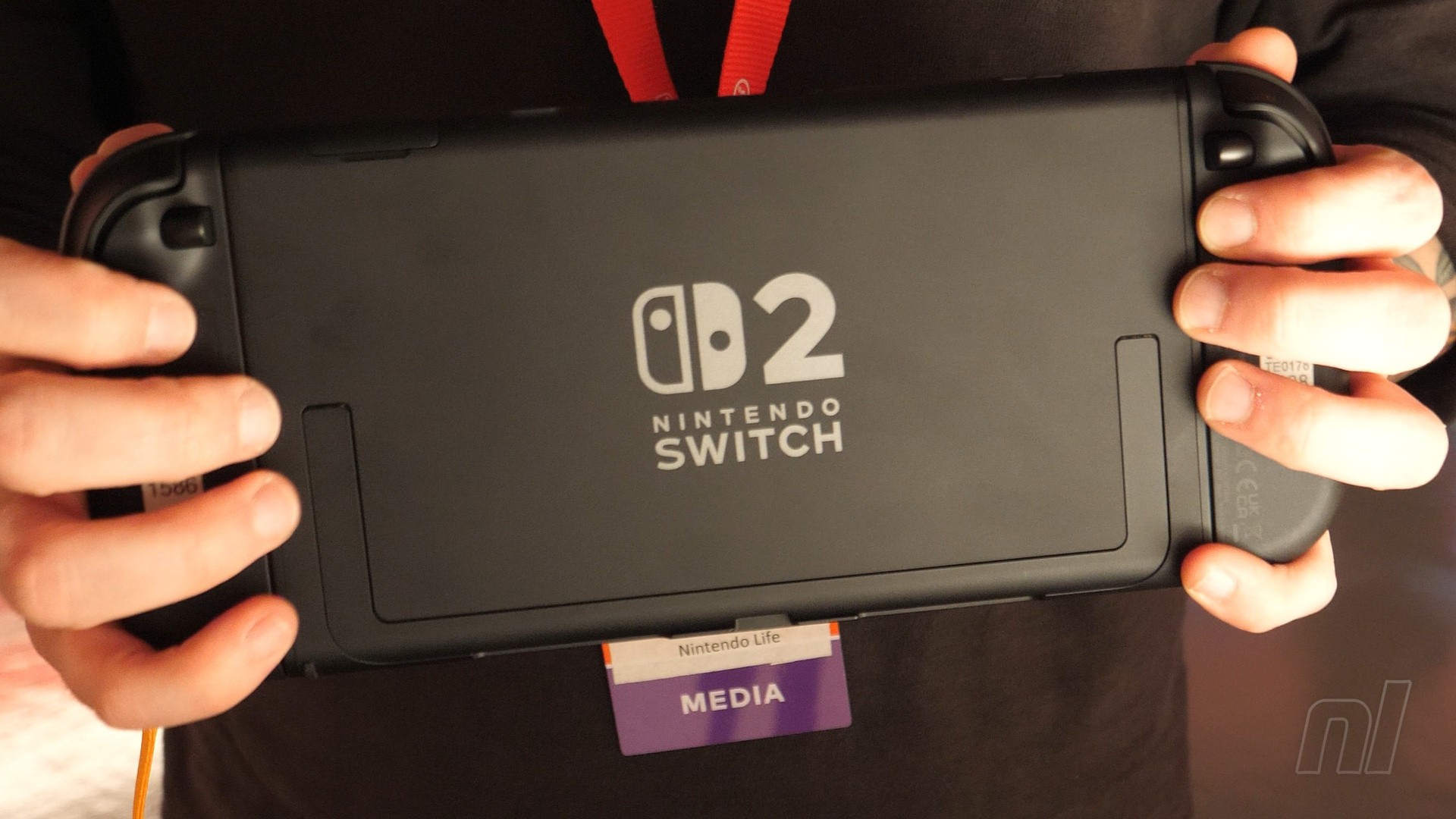
Nintendo Switch 2 Handheld Mode – Image by (Pinterest)
Future-Proof in Nintendo’s Own Way
Nintendo doesn’t try to “future-proof” its consoles the way Sony and Microsoft do. Instead of chasing raw power, Nintendo focuses on creating hardware that’s unique, reliable, and fun to use for years. The Switch 2 follows that same formula. A 1080p screen may not sound flashy, but it makes perfect sense it keeps the handheld mode efficient, ensures the system stays relevant for a good few years, and pairs well with features like DLSS to make docked gaming shine.
The Sweet Spot
At the end of the day, 1080p is a sweet spot for the Switch 2. On an 8-inch display, it looks sharp and vibrant. It doesn’t drain the battery, it doesn’t cause overheating, and it doesn’t push the price tag through the roof. Add DLSS into the mix, and you’ve got a console that feels modern without sacrificing what makes the Switch so appealing.
Sometimes “bigger numbers” don’t equal a better experience. Nintendo knows this better than anyone, and with the Switch 2, they proved once again that 1080p was the right call.
Also Read